
What is a Corsage?

Source: Unsplash
A corsage is a small floral arrangement worn by the important women in the wedding party. Traditionally, it symbolises love, respect, and appreciation while adding a graceful finishing touch to the outfit. From fresh blooms to preserved designs, wedding corsage Singapore styles are crafted to complement the wedding theme without overshadowing the bride's bouquet.Which are the Best Flowers for a Corsage?
Choose flowers that are lightweight, elegant, and can stay fresh throughout the celebration.- Rose Corsage: One of the most versatile flowers for a corsage, roses pair effortlessly with almost every wedding theme. Opt for spray roses if you prefer a delicate, lightweight design.
- Orchid Corsage: Orchids are naturally sturdy, making them ideal for long ceremonies and humid weather. Their elegant shape also means you can use fewer blooms without the corsage looking sparse.
- Carnation Corsage: If durability is your priority, carnations are hard to beat. Their ruffled petals add fullness, making even a small corsage look lush.
- Spray Roses Corsage: With multiple small blooms on a single stem, spray roses create a fuller corsage without adding extra weight, making them especially comfortable for wrist corsages.
- Baby's Breath Corsage: Baby's breath softens the overall arrangement and fills empty spaces without overwhelming the focal flowers. It also pairs well with almost every bloom.
How to Style Your Corsage?
- Wrist Corsage: Worn on a ribbon or elastic band, this is the most popular style for mothers, grandmothers, and bridesmaids as it's comfortable to wear throughout the day.
- Pin Corsage: Attached to the dress or outfit with floral pins, offering a more traditional and formal appearance.
Who Wears a Corsage at a Wedding?
Traditionally, corsages are worn by the women closest to the couple.- Mother of the Bride & Mother of the Groom: A heartfelt way to honour both mothers.
- Grandmothers: Recognises their special role in the celebration.
- Bridesmaids: Some couples choose corsages as an alternative to carrying bridesmaid's bouquets.
- Close Female Relatives or Friends: Anyone the couple wishes to acknowledge can also wear a corsage.
What is a Boutonniere?

Source: Unsplash
A boutonniere is a small floral arrangement worn on the left lapel of a suit or tuxedo. Traditionally, it is reserved for the groom and key male members of the wedding party, adding a refined finishing touch to their attire. Today, florists offering boutonniere Singapore designs create everything from timeless single-flower styles to contemporary arrangements that perfectly complement the wedding theme.Which are the Best Flowers for a Boutonniere?
A boutonniere for wedding should be crafted using flowers that are compact, durable, and elegant enough to stay fresh throughout the celebration.- Rose Boutonniere: A classic option that suits almost every suit colour. White, ivory, and red roses remain the most popular choices for grooms.
- Calla Lily Boutonniere: Its sleek shape creates a clean, contemporary look, making it especially suitable for black-tie and minimalist weddings.
- Alstroemeria Boutonniere: Known for its long vase life, alstroemeria stays fresh for hours while adding subtle texture and colour variation.
- Orchid Boutonniere: A single orchid bloom makes an elegant statement without appearing oversized, especially on slim lapels.
- Carnation Boutonniere: Carnations hold up exceptionally well throughout the day, making them a practical choice for outdoor weddings and destination ceremonies.
How to Style Your Boutonniere?
- Classic Lapel Boutonniere: The traditional choice, pinned to the left lapel of the jacket for a clean and polished look.
- Pocket Boutonniere: A modern, pin-free alternative that sits neatly inside the jacket pocket, making it comfortable while adding a fuller floral display.
Who Wears a Boutonniere at a Wedding?
Boutonnieres are typically worn by the important men involved in the wedding ceremony.- The Groom: A boutonniere for groom is usually designed with a distinctive flower or detail to help him stand out. Couples looking for a groom boutonniere Singapore often personalise it to match the bridal bouquet.
- Best Man and Groomsmen: A matching groomsmen boutonniere creates a cohesive look across the wedding party.
- Fathers and Grandfathers: A thoughtful way to honour both families.
- Ring Bearer, Ushers, and Officiant: They may also wear boutonnieres to complete the wedding party.
What's the Difference between Corsage and Boutonniere?
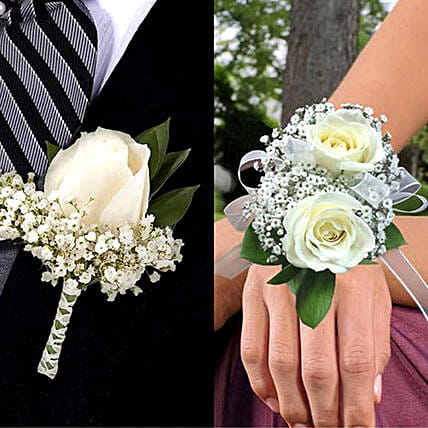
Source: FNP.sg
If you're wondering about the difference between a corsage and boutonniere, it simply comes down to who wears them and how they're styled.| Corsage | Boutonniere |
| Worn by mothers, grandmothers, bridesmaids, and other important women. | Worn by the groom, fathers, best man, groomsmen, and other important men. |
| Available as a wrist corsage or pin corsage | Typically pinned to the left lapel or worn as a pocket boutonniere. |
| Usually features a small cluster of flowers and foliage. | Often designed with a single focal bloom and greenery. |
| Pairs beautifully with dresses and gowns. | Complements suits and tuxedos. |
Choosing the Right Corsage and Boutonniere Colours

Source: Unsplash
Choosing the right colours for your corsage and boutonniere isn't just about matching the décor. The right combination helps distinguish key members of the wedding party while keeping the overall look cohesive.1. White flower corsage and boutonniere:
The safest choice if your wedding features multiple colours. White blends effortlessly with every outfit and lets the flowers stand out without competing with the attire.2. Pink and white flower corsage and boutonniere:
Works beautifully for outdoor and daytime weddings, adding softness while still showing up well in photographs.3. Blush Pink flower corsage and boutonniere:
A great option if your bridal party is wearing neutral or champagne tones, as it adds warmth without looking overpowering.4. Purple flower corsage and boutonniere:
Choose deeper purple hues for evening receptions or ballroom weddings where richer colours naturally complement the setting.4. Royal Blue flower corsage and boutonniere:
Ideal when blue is part of your wedding palette, creating a striking contrast against grey, black, or beige suits.5. Black and red corsage and boutonniere:
Best reserved for modern or themed weddings, where the dramatic contrast feels intentional rather than overpowering.Corsage and Boutonniere Etiquette
Corsage and boutonniere etiquette isn't about following strict rules. It's about making thoughtful choices that ensure every important person feels valued and celebrated. Here are a few timeless etiquette tips to keep in mind:- Let the couple stand out: The bride and groom's floral accessories should feature a distinctive flower, colour, or styling detail that sets them apart.
- Keep it balanced: If parents or grandparents on one side receive corsages or boutonnieres, extend the same gesture to the other family to make everyone feel equally included.
- Make it personal: Wedding traditions are a guide, not a rulebook. Feel free to honour siblings, mentors, close friends, or anyone who has played a meaningful role in your journey.


