

What Does Flower Arranging as Meditation Really Mean?
At its core, this practice is about doing one thing, slowly and with attention. Instead of focusing on your breath alone, you focus on flowers: their colours, textures, weight, and fragrance. Unlike traditional meditation, there’s no pressure to “empty your mind.” Your hands are busy, which makes it easier for the mind to settle. This is often described as meditation with flowers, where the act of arranging becomes the meditative moment itself. You’re not creating something for display. You’re creating space for yourself.
Image Source: Unsplash
Why Flowers Help You Slow Down
Flowers naturally invite pause. You can’t rush them. Here’s why working with flowers feels calming almost instantly:- They engage your senses without overwhelming them
- They encourage slow, deliberate movement
- They gently pull attention away from screens and thoughts
- They allow emotional expression without words

Image Source: Pexels
The Benefits Go Beyond Relaxation
This practice may look simple, but its impact runs deeper than you might expect. Some quiet yet powerful flower therapy benefits include:- Reduced stress and mental fatigue
- Better emotional grounding
- Improved focus and clarity
- A sense of creative satisfaction
- Feeling calmer without “trying” to relax
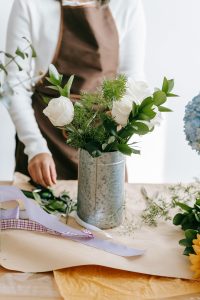
Image Source: Pexels
What You’ll Need (Spoiler: Very Little)
One of the most comforting things about this practice is how accessible it is. You’ll need:- A few fresh or dried flowers (even 3-4 stems are enough)
- Any vase, bowl, or container you already have or a ribbon
- Scissors or garden shears
- 15-20 minutes of uninterrupted time

Image Source: Unsplash
Also Read: Red Rose Flower Therapy: How Roses Heal the Heart, Mind & Mood
How to Practise Flower Arranging as Meditation
You don’t need a step-by-step formula, but a gentle flow helps. Here’s an easy way to begin:- Start with a pause: Before touching the flowers, take a few slow breaths. Let your body arrive where you are.
- Observe before arranging: Notice the colours, the curves of the stems, the softness of petals, the scent.
- Move slowly: Cut one stem at a time. Place it. Adjust. There’s no rush.
- Let intuition lead: Don’t think about symmetry or perfection. Let the arrangement grow naturally.
- Breathe with your hands: If your mind wanders, bring attention back to what your fingers are doing.
- End with stillness: Sit with your arrangement for a moment. No judging. Just noticing.

Image Source: Pexels
Ways to Make the Experience Even More Relaxing
Once you’re comfortable, you can deepen the practice with small additions:- Arrange in silence or with soft instrumental music
- Practise near natural light or an open window
- Light a candle to signal “quiet time”
- Choose flowers that make you feel comforted

Image Source: Pexels
Who Is This Practice For?
Honestly? Almost everyone. It’s especially helpful for:- People who find traditional meditation difficult
- Busy minds that need gentle focus
- Creative souls looking for calm
- Anyone craving a screen-free ritual

Image Source: Pexels