

Why the Right Vase Matters for a Flower Vase Arrangement
A thoughtfully chosen vase does more than hold your flowers. It influences the overall look and feel of your arrangement. Here's why selecting the right vase matters:- Provides the right support: The vase keeps stems upright, preventing delicate flowers from drooping or heavy blooms from toppling over.
- Shapes the arrangement: The height and opening of the vase determine whether flowers appear compact, airy, rounded, or cascading.
- Creates visual balance: Matching the vase size to the bouquet ensures the arrangement looks proportionate rather than overcrowded or sparse.
- Highlights each bloom: The right vase allows flowers to open naturally without competing for space, making every stem stand out.
- Complements your decor and occasion: From sleek glass cylinders to rustic pitchers, the vase plays an important role in defining the style of your flower vase arrangement.
Types of Flower Vases and How to Create a Beautiful Flower Vase Arrangement
1. Cylinder Vase
Structure:
A cylinder vase has straight sides, a wide opening, and a flat base, making it one of the most versatile vases for floral displays. Its simple shape provides enough space for stems to spread naturally while keeping the arrangement structured. A transparent cylinder is especially popular for a glass vase arrangement as it highlights both the blooms and the stems.Best flowers:
Roses, lilies, tulips, hydrangeas, sunflowers, gladiolus, chrysanthemums, and mixed bouquets.How to arrange:
- Trim the stems according to the vase height, keeping taller blooms around one and a half times the height of the vase.
- Add greenery or foliage around the edges first to create a natural framework.
- Place the largest or most eye-catching blooms as focal flowers in the centre.
- Add smaller flowers between the larger blooms to create volume while keeping the arrangement airy.
- Turn the vase as you arrange to ensure the bouquet looks balanced from every angle.
- For roses, use flowers at slightly different heights to create a layered rose arrangement in vase instead of a flat, uniform look.

Image Source: Pexels
2. Bud Vase
Structure:
A bud vase is a small vase with a narrow opening designed to hold a limited number of stems. Its slim shape keeps delicate flowers upright and allows individual blooms to become the main focus. It works especially well for minimalist arrangements placed on desks, bedside tables, or small dining spaces.Best flowers:
Single roses, orchids, carnations, daisies, tulips, baby's breath, and eucalyptus stems.How to arrange:
- Select one statement flower or a small combination of two to three stems.
- Trim the stems so the bloom sits slightly above the opening rather than getting lost inside the vase.
- Add one or two foliage stems behind the flower to create depth.
- Keep the arrangement loose and avoid overcrowding the narrow opening.
- Use multiple bud vases together with different flowers for a layered table display.

Image Source: AI Generated Image
3. Trumpet Vase
Structure:
A trumpet vase has a narrow base that gradually widens into a flared opening, creating a graceful silhouette. The wider top allows flowers to spread outward while the narrow base keeps stems gathered and supported. This makes it a popular choice for elegant centrepieces and formal floral arrangements.Best flowers:
Lilies, orchids, roses, gladiolus, snapdragons, delphiniums, and tall seasonal flowers.How to arrange:
- Start with the tallest stems in the centre to establish the height of the arrangement.
- Add medium-sized flowers around the centre while maintaining a natural upward flow.
- Place softer, cascading blooms near the outer edges to take advantage of the flared opening.
- Keep the lower section compact and the upper section airy for a balanced shape.
- Avoid filling the wide opening completely. Allow some space for flowers to naturally spread and create movement.

Image Source: AI Generated Image
4. Hourglass Vase
Structure:
An hourglass vase has a narrow centre with wider openings at the top and bottom, creating a curved silhouette that naturally gathers flower stems. The narrow middle provides support while the wider top allows blooms to spread, making it ideal for creating rounded, bouquet-style displays.Best flowers:
Roses, tulips, peonies, carnations, gerberas, dahlias, and mixed seasonal flowers.How to arrange:
- Trim the stems so the flowers sit slightly above the widest part of the vase opening.
- Start by placing the strongest stems through the narrow centre to create the structure of the arrangement.
- Add larger blooms around the outer edges, allowing them to create a soft rounded shape.
- Fill gaps with smaller flowers while maintaining an even distribution of colour and texture.
- Keep the arrangement slightly dome-shaped to complement the curved design of the vase.

Image Source: AI Generated Image
5. Fish Bowl Vase
Structure:
A fish bowl vase is a round, wide-mouthed vase with a spacious interior that works best for low, full arrangements. Its curved shape allows flowers to spread naturally in all directions, making it suitable for compact centrepieces and lush floral displays.Best flowers:
Hydrangeas, peonies, chrysanthemums, roses, carnations, floating flowers, and compact mixed bouquets.How to arrange:
- Cut flower stems shorter so the blooms sit close to the opening and create a full appearance.
- Place foliage around the inside edges to form a base and hide the stems.
- Add larger flowers evenly around the vase instead of clustering them in one area.
- Fill empty spaces with smaller blooms to create a rounded, balanced look.
- Keep the top surface slightly curved rather than flat to enhance the natural dome shape.
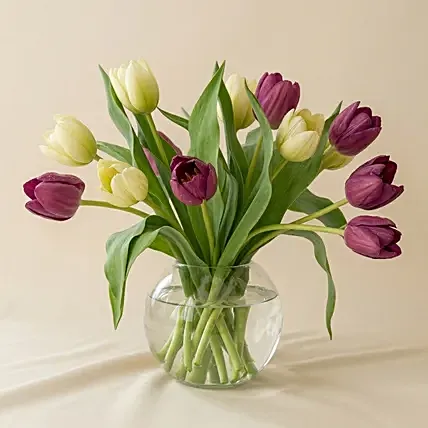
Image Source: FNP.sg
6. Cube Vase
Structure:
A cube vase is a short, square-shaped vase with a wide opening and sturdy base. Its compact structure is perfect for small, structured arrangements where flowers appear dense and neatly grouped. It works well for modern décor and tabletop displays.Best flowers:
Carnations, roses, tulips, gerberas, orchids, succulents, and small mixed bouquets.How to arrange:
- Cut stems shorter so the flowers sit just above the height of the vase.
- Create a base with greenery or foliage to support the blooms.
- Arrange flowers closely together to create a compact cluster rather than a loose bouquet.
- Place the largest blooms slightly higher and surround them with smaller flowers for dimension.
- Keep the arrangement proportional, the flowers should not overpower the geometric shape of the vase.

Image Source: FNP.sg
7. Ginger Jar Vase
Structure:
A ginger jar vase has a rounded body with a narrow neck, making it ideal for supporting flowers with large, heavy blooms. The slim opening naturally gathers the stems, helping create lush, full arrangements without requiring floral foam or tape.Best flowers:
Hydrangeas, peonies, dahlias, garden roses, chrysanthemums, ranunculus, and seasonal mixed flowers.How to arrange:
- Start with sturdy foliage to create a natural framework inside the vase.
- Place larger blooms evenly around the opening to establish the overall shape.
- Fill the centre with medium-sized flowers to create depth and volume.
- Add smaller filler flowers only where needed to soften gaps without overcrowding the arrangement.
- Let the rounded silhouette do the work - a hydrangea vase arrangement looks best when the blooms form a soft, full dome just above the vase.

Image Source: Pexels
8. Bottle Vase
Structure:
A bottle vase features a tall, slim neck with a narrow opening that keeps stems closely grouped. Its minimalist design is perfect for showcasing the beauty of individual flowers or delicate stems without overwhelming the display.Best flowers:
Lavender, eucalyptus, baby's breath, dried flowers, cherry blossoms, billy buttons, and single-stem roses.How to arrange:
- Choose one statement stem or a small collection of slender flowers.
- Trim the stems so they stand naturally without bending under their own weight.
- Position the tallest stem first, then add finer stems around it for subtle texture.
- Avoid mixing bulky blooms, as the narrow opening is designed for lightweight arrangements.
- Leave visible space between the stems to maintain the vase's clean, minimalist aesthetic.

Image Source: Pexels
9. Pitcher Vase
Structure:
Originally designed for serving beverages, a pitcher vase has a wide body, flared opening, and sturdy handle that lends itself beautifully to relaxed, garden-inspired floral arrangements. Its generous shape accommodates flowers with thicker stems and naturally flowing foliage.Best flowers:
Sunflowers, daisies, cosmos, wildflowers, chrysanthemums, zinnias, and eucalyptus.How to arrange:
- Begin with leafy greenery to create a loose, organic foundation.
- Place larger flowers at varying heights instead of keeping them level.
- Allow a few stems to lean gently over the rim for a freshly gathered, garden-picked look.
- Tuck smaller flowers between focal blooms to add texture without making the arrangement appear formal.
- A sunflower vase arrangement looks especially striking when the blooms face slightly different directions, creating movement and a natural countryside feel.

Image Source: Pexels
10. Urn Vase
Structure:
An urn vase features a wide bowl, a narrow pedestal, and a broad opening, making it ideal for large, statement-making floral arrangements. Its generous size supports abundant blooms and creates a grand, symmetrical display that's often seen at weddings, entrances, and special events.Best flowers:
Hydrangeas, roses, peonies, lilies, delphiniums, gladiolus, eucalyptus, and seasonal foliage.How to arrange:
- Build a sturdy base using leafy greenery to create shape and support.
- Position taller flowers in the centre to establish height and draw the eye upward.
- Arrange larger blooms around the middle to create a rounded silhouette.
- Fill the outer edges with smaller flowers and trailing foliage to soften the arrangement.
- For a flower arrangement in big vase, avoid filling every gap, leaving small pockets of space gives the arrangement depth and prevents it from looking heavy.

Image Source: Pexels
11. Rectangular Vase
Structure:
A rectangular vase is long and narrow, making it perfect for linear floral designs and table centrepieces. Its elongated shape encourages flowers to spread horizontally rather than forming a rounded bouquet, creating a clean and contemporary look.Best flowers:
Orchids, lilies, tulips, calla lilies, anthuriums, bamboo, tropical foliage, and mixed modern arrangements.How to arrange:
- Distribute flowers evenly across the length of the vase instead of concentrating them in the middle.
- Alternate focal flowers with greenery to create rhythm and visual balance.
- Vary the stem heights slightly to add movement without disrupting the linear design.
- Keep one side from becoming visually heavier than the other by checking the arrangement from the front.
- A flower arrangement in rectangular vase works best when flowers follow the shape of the vase, while an orchid arrangement in vase can be styled by allowing the stems to arch gracefully across the arrangement.

Image Source: Pexels
12. Footed Vase
Structure:
A footed vase sits on a raised base, lifting the arrangement and making it appear more prominent. Its elevated design naturally draws attention to the flowers, making it a popular choice for dining tables, mantels, and elegant centrepieces.Best flowers:
Garden roses, peonies, ranunculus, carnations, lisianthus, dahlias, and mixed seasonal flowers.How to arrange:
- Start by placing medium-height flowers around the centre to establish the overall shape.
- Add larger blooms slightly above them to create gentle height without making the arrangement top-heavy.
- Use delicate filler flowers to soften the edges and add texture.
- Keep the flowers evenly balanced on all sides, as the raised base makes uneven arrangements more noticeable.
- Leave enough open space around the rim so the vase itself remains part of the display.

Image Source: Pexels
13. Flared Vase
Structure:
A flared vase has a narrow base that gradually widens towards the top, giving flowers more room to open naturally. The broad rim encourages stems to fan out, making it an excellent choice for airy, free-flowing arrangements that showcase the natural movement of each bloom.Best flowers:
Tulips, lilies, irises, snapdragons, gladiolus, alstroemerias, and seasonal spring flowers.How to arrange:
- Place the tallest stems towards the centre to create a natural focal point.
- Arrange flowers with curved stems near the rim so they can arch outward gracefully.
- Leave enough space between blooms to allow them to open fully without overlapping.
- Add light foliage sparingly to frame the flowers rather than hiding them.
- A tulip vase arrangement looks most natural when the stems are given room to bend and gently drape over the edge instead of being forced to stand perfectly upright.

Image Source: Pexels
14. Mason Jar Vase
Structure:
A mason jar has a compact, cylindrical shape with a moderately wide opening that suits casual, rustic-style arrangements. Its simple design pairs well with freshly picked flowers and country-inspired décor, making it a favourite for everyday styling and DIY centrepieces.Best flowers:
Wildflowers, daisies, carnations, baby's breath, lavender, chamomile, and small sunflowers.How to arrange:
- Start with greenery to create a relaxed, natural-looking base.
- Mix flowers of different heights instead of arranging them uniformly.
- Group similar flowers together in small clusters for a freshly gathered appearance.
- Allow a few stems to lean slightly instead of keeping every flower upright.
- Avoid packing the jar too tightly. The beauty of this style lies in its effortless, garden-picked charm.

Image Source: Pexels
15. Posy Vase
Structure:
A posy vase is a small, rounded vase with a narrow neck that supports compact bouquets. It naturally gathers stems together, making it ideal for short-stemmed flowers and petite arrangements that look neat and balanced.Best flowers:
Spray roses, carnations, daisies, mini gerberas, lisianthus, chrysanthemums, and mixed seasonal blooms.How to arrange:
- Cut all stems relatively short so the bouquet stays compact.
- Place one or two focal flowers first to define the arrangement.
- Surround them with smaller blooms to create a soft, rounded shape.
- Use delicate filler flowers only to soften gaps rather than dominate the bouquet.
- A small vase arrangement looks best when the flowers form a neat dome that's slightly wider than the vase opening without spilling over the sides.

Image Source: AI Generated Image
16. Tall Floor Vase
Structure:
A tall floor vase is designed for floor placement and features a deep body that accommodates extra-long stems, branches, and ornamental foliage. Unlike tabletop vases, it relies on height and scale to make a statement, making it ideal for entryways, living rooms, and spacious corners.Best flowers:
Gladiolus, delphiniums, cherry blossom branches, pussy willow, pampas grass, monstera leaves, eucalyptus, and decorative branches.How to arrange:
- Begin with the tallest branches or foliage to establish the height of the display.
- Position thicker stems towards the back or centre for stability.
- Add flowers in small groups instead of filling the vase completely.
- Allow stems to extend naturally without trimming them too short, preserving their elegant proportions.
- A tall vase flower arrangement should emphasise height and clean lines rather than fullness, so avoid overcrowding the vase.

Image Source: Pexels
Choosing the Right Vase for Different Flowers
Not every flower suits every vase. Matching the bloom to the right vase helps create a balanced arrangement while allowing each flower to display its natural form.| Flower | Recommended Vase | Why It Works |
| Roses | Cylinder Vase | Supports layered bouquets and keeps stems evenly spaced |
| Tulips | Flared Vase | Gives growing stems room to bend and bloom naturally |
| Hydrangeas | Ginger Jar Vase | The narrow neck supports heavy flower heads without additional support |
| Sunflowers | Pitcher Vase | Accommodates thick stems while creating a relaxed, rustic display |
| Orchids | Rectangular Vase | Highlights their graceful arching stems in modern arrangements |
| Lilies | Trumpet Vase | Encourages tall blooms to spread elegantly without crowding |
| Carnations | Cube or Posy Vase | Creates compact, structured bouquets for smaller spaces |
| Wildflowers | Mason Jar | Enhances their natural, freshly picked appearance |
| Decorative Branches | Tall Floor Vase | Maintains proportion and showcases their natural height |
Common Flower Vase Arrangement Mistakes to Avoid
Even the freshest flowers can lose their impact if they're arranged without considering the vase. Avoid these common mistakes for a more polished display:- Choosing the wrong vase size: A vase that's too small can overcrowd stems, while one that's too large may leave flowers looking sparse.
- Ignoring the vase opening: Wide openings need fuller arrangements, whereas narrow-neck vases are better suited to fewer stems.
- Keeping every stem the same height: Varying stem lengths creates depth and makes the arrangement look more natural.
- Placing heavy blooms around the rim: Concentrating larger flowers on the edges can make the arrangement appear unbalanced.
- Forcing flowers into a shape: Let naturally curved stems, such as tulips and orchids, follow their natural direction instead of trying to keep them perfectly upright.
- Overfilling the arrangement: Leaving a little breathing space between flowers helps each bloom stand out and creates a cleaner overall look.