


Image Source: Pexels
Sahur & Iftar: The Daily Heartbeat of Family
Every day during Ramadan starts before the sun does. Parents wake their children, the kitchen light flicks on, and the day begins with sahur - the pre-dawn meal eaten before the fast starts. It's a small, sleepy ritual, but there's something tender about it: the whole household gathered at the table in the early quiet, sharing a meal before the world wakes up. Around Singapore, hawker centres and eateries quietly open their shutters in these early hours, knowing families will come. It's a reminder that sahur isn't just a home tradition, it ripples out into the neighbourhood. Then comes sunset, and with it, buka puasa, the breaking of the fast. If sahur is quiet and intimate, iftar is warm and expansive. Mosques across Singapore host community iftars, and it's not uncommon to find neighbours of different faiths sitting side by side, sharing a meal. That openness, that willingness to welcome others in, feels very Singaporean. It turns a daily religious practice into something that belongs to the whole community.
Image Source: Pexels
Ramadan Bazaars: The Family Outing Everyone Looks Forward To
Ask anyone who grew up in Singapore what they remember most fondly about Ramadan, and the bazaar almost always comes up. The Geylang Serai Ramadan Bazaar and the Kampong Gelam Ramadan Bazaar are the two iconic ones, and they're an experience in every sense of the word. These bazaars are woven into the Ramadan traditions of Singapore like few other things are. Families plan their visits like little outings - parents, children, grandparents in tow. You weave through rows of stalls, stopping to try apam balik here, picking up a bottle of bandung there, debating which kuih to bring home. It's noisy and colourful and delicious, and for many families, it's where younger generations get their first real taste of Malay culinary heritage. Beyond the food, the bazaars are also where families shop for Hari Raya - new outfits, home decorations, all the things that signal the celebration is coming. It's part market, part carnival, and entirely beloved.
Image Source: Unsplash
Tarawih Prayers: Faith Practised Together
One of the quieter but deeply meaningful Ramadan family traditions is the Tarawih - special prayers performed at the mosque each night after the Isha prayer. Throughout the month, mosques across Singapore hold these congregational prayers, with the spiritual goal of completing the recitation of the entire Quran by the end of Ramadan. What makes Tarawih special in a family context is the togetherness of it. Parents bring their older children. Teenagers come with their friends but see familiar faces from the neighbourhood. There's a gentle discipline to it - showing up, night after night, together. It anchors the month in something beyond the social celebrations, a shared spiritual commitment that families carry into Hari Raya and beyond.
Image Source: Unsplash
Also Read: Fun Ramadan Activities To Do With Kids
Green Packets: A Tradition That Tells a Beautiful Story
If you grew up in Singapore, Malaysia, Brunei, or Indonesia, you already know the thrill of receiving a green packet as a child. Known as duit raya or sampul hijau, these little envelopes filled with money are one of the most beloved Ramadan gifts in Singapore, given by adults to children and younger relatives as tokens of blessing and generosity. What makes this tradition particularly interesting is its origin. The green packet is, in many ways, a cultural cousin of the Chinese red packet given during Chinese New Year. Living alongside one another for generations, the Malay and Chinese communities in Singapore have quietly influenced each other's celebrations, and duit raya is perhaps the most charming example of that exchange. For children, the joy of collecting green packets is almost competitive - comparing stacks, counting totals. For adults, it's an act of giving that carries genuine warmth. Some families now personalise their packets with family photos or names, turning a simple gesture into something a little more memorable.
Image Source: Unsplash
Balik Kampung: The Journey Home
There's a phrase that carries a lot of heart this time of year: balik kampung. Literally, it means "return to the village," but what it really means is going home to your parents' home, to the house you grew up in, to the people who have always been at the centre of your world. In modern Singapore, balik kampung has taken on a new shape. Families are spread across the island, and sometimes across borders, children who've moved abroad for work or study make the effort to fly home for Hari Raya. The expressways get busy. The airports buzz with familiar faces. And somewhere, an elderly grandmother is setting extra places at the table. The tradition carries with it a deeply held value: ‘maaf zahir dan batin’, the asking and granting of forgiveness, the patching up of any distance that may have grown between family members over the year. It's humbling and healing in equal measure, and it makes the reunion feel like more than just a gathering. It feels like a renewal.
Image Source: Pexels
Feasting Together: The Hari Raya Table
As the end of Ramadan draws near, Malay kitchens across Singapore shift into a different gear. The cooking starts days before Hari Raya, and it's rarely a solo effort. Grandmothers supervise, mothers execute, and children hover nearby hoping to steal a taste before it's ready. Multi-generational cooking is very much part of the celebration itself. Rice is at the heart of the Hari Raya spread, reflecting its place as the staple of Malay cuisine. Ketupat, compressed rice packed into woven coconut leaf pouches, sits beside lontong, soft rice cakes ladled with rich coconut-based gravy. Around them come the accompaniments: slow-cooked rendang, smoky satay, colourful kuih piled high on trays. Many families also put together Ramadan hampers in Singapore to share with relatives, neighbours, and friends, thoughtfully packed with festive treats that carry the spirit of the season from one household to another. It's a gesture that extends the table beyond the home and into the community. The recipes themselves are heirlooms. Passed from one generation to the next. They carry the memory of every Hari Raya that came before a grandmother's specific ratio of coconut milk, a father's method for threading the satay just so. Sitting down to that table is, in a very real sense, sitting down with history.
Image Source: Unsplash
The Finishing Touches: Charity, New Clothes, and Festive Lights
As Hari Raya approaches, the last few details fall into place, and each one carries its own quiet meaning. Before the Eid prayers, families fulfil Zakat al-Fitr, a charitable contribution made to ensure that those who are less fortunate can also celebrate. Many parents involve their children in this act of giving early, making generosity feel like a natural part of the season rather than an obligation. Alongside Zakat, it has become increasingly popular to send Hari Raya gift hampers in Singapore to loved ones, beautifully curated parcels of festive food and treats that arrive at the door like a warm hug. Then there's the matter of new clothes. Families coordinate their baju kurung and baju Melayu outfits, matching in colour, sometimes in fabric , and the shopping for these during Ramadan is its own event. Children weigh in. Aunties have opinions. It's a lively, joyful exercise in family democracy. And finally, the homes. String lights go up around the windows. Pelita oil lamps flicker softly along the walkways. Hari Raya banners are hung with care. By the time the first morning of Hari Raya arrives, every home has been transformed into a place that says: you are welcome here. Come in. Celebrate with us.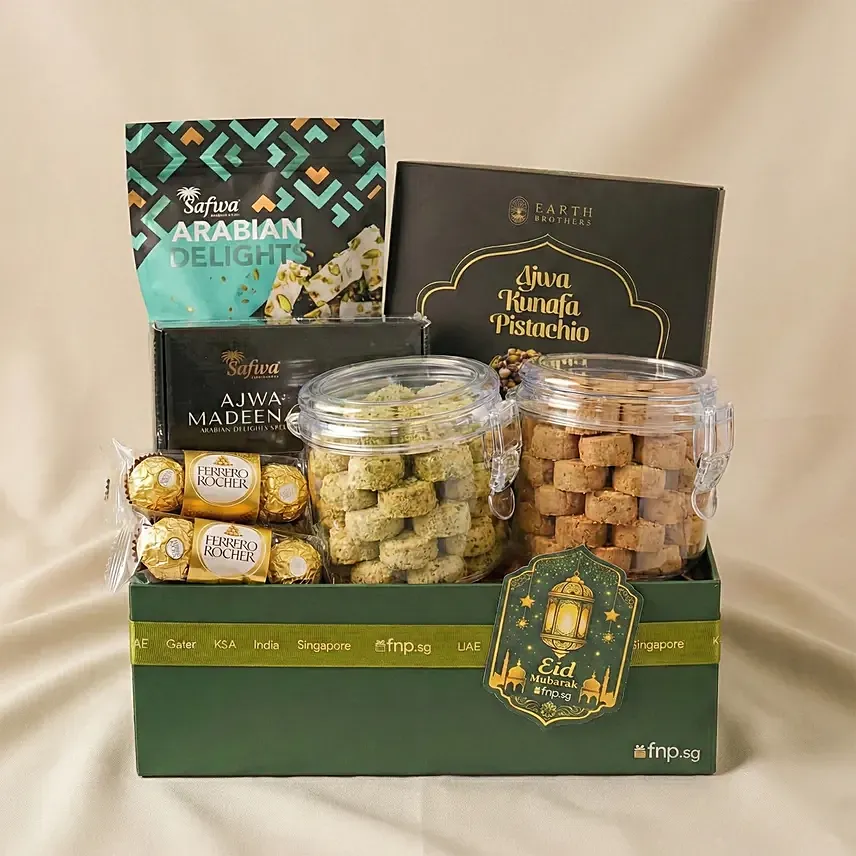
Image Source: Fnp.sg