

When Your Dress and Wedding Flowers Bouquet Become One Bridal Statement
Your wedding dress may be the star of the show, but your bouquet is far from a background player. The wedding flowers bouquet you carry sit right at the centre of your body, appear in almost every close-up photograph, and often become the detail your hands naturally draw attention to. When chosen thoughtfully, wedding flowers don’t just look beautiful; they complete your silhouette, elevate your photos, and pull your entire bridal look together. Many brides treat bouquets as a last-minute decision or choose them based purely on what’s trending. That’s where things quietly go wrong. A mismatched bouquet won’t ruin your look, but it can dilute the impact of even the most stunning dress. By the end of this guide, you’ll understand exactly how to choose bouquet for wedding dress harmony, so your flowers feel intentional, effortless, and unmistakably you.Let Your Wedding Dress Set the Design Direction
Before you think about flowers, colours, or Pinterest boards, come back to one simple truth: your dress is the hero. Everything else, jewellery, makeup, hair, and bridal bouquets, exists to support it. Start by assessing three key elements of your dress:Silhouette:
plays a major role in how much visual weight your bouquet should carry. A dramatic ball gown or voluminous lehenga already commands attention, while a sheath or mermaid dress relies on clean lines and proportion.Fabric sets the mood:
Lace tells a different story than satin. Organza feels lighter than crepe. Your bouquet should speak the same emotional language as the material touching your skin.Details matter:
more than brides realise. Heavy embroidery, beadwork, ruffles, or minimalist seams all influence how “busy” your overall look already is.A crucial pro tip:
Always finalise your dress before locking your flowers. Dresses dictate flowers far more than the other way around. Think of it this way. If your dress walked into the room first, what should your flowers say next? This mindset becomes the foundation of any reliable bouquet wedding dress matching guide.
Image Source: Unsplash
Understanding the Role of Texture in Bridal Styling
Why Texture Creates Harmony Before Colour Does
Colour catches the eye, but texture creates harmony. Two things can be the same colour and still clash completely if their textures fight each other. Dresses have texture, raised lace, smooth satin, layered tulle, and flowers do too. When these textures align, the bouquet feels like a natural extension of the dress rather than a separate object. Ignoring texture often leads to what photographers call a “noisy frame”, where the eye doesn’t know where to rest.
Image Source: Unsplash
A Fabric and Wedding Flowers Bouquet Compatibility Guide for Brides
Lace Gowns: Soft, Romantic Blooms
Lace dresses are already rich in detail and softness. They pair beautifully with layered, petal-heavy flowers like peonies, garden roses, or ranunculus. These blooms echo lace’s romantic quality without overwhelming it, making them timeless flower ideas to match dress styles rooted in elegance.Satin or Silk Gowns: Clean Lines and Sculptural Florals
Smooth, reflective fabrics need flowers with shape and confidence. Calla lilies, orchids, and anthuriums bring structure and sophistication. Their clean forms complement satin’s polish rather than competing with it.Tulle or Organza Dresses: Lightness Meets Lightness
Lightweight fabrics feel best with equally weightless flowers. Baby’s breath, spray roses, or small wildflowers maintain a soft, floating aesthetic that suits outdoor and daytime weddings especially well.Heavily Embellished Dresses: Let Simplicity Do the Work
If your dress sparkles, your bouquet should breathe. Single-variety bouquets or restrained colour palettes prevent visual overload and keep the focus where it belongs.Knowing When to Edit Back
When both dress and bouquet are highly detailed, nothing stands out. Intentional restraint is what creates luxurious wedding bouquet and dress coordination.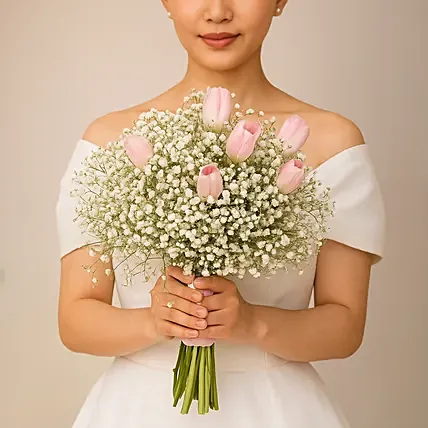
Image Source: FNP.sg
Also Read: Why Are Flowers So Important in Weddings?
Creating a Colour Story That Feels Intentional
Colour matching isn’t about perfection. It’s about balance. Start by identifying your dress’s undertone. Pure white, ivory, champagne, blush, and pastel dresses all interact differently with flowers.- Ivory gowns often glow when paired with warm neutrals, blush, or soft peach tones.
- Pure white dresses tend to photograph best with crisp whites, subtle greenery, or very controlled accents.
- Champagne or gold-toned dresses benefit from muted pastels or earthy hues.
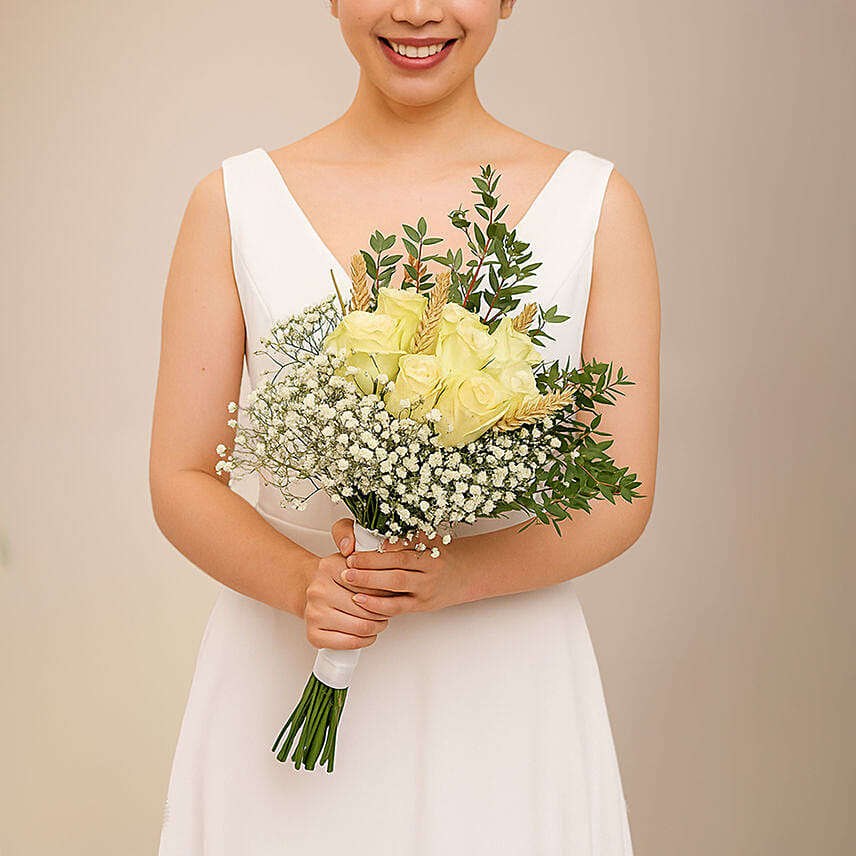
Image Source: FNP.sg
Let the Season Do Some of the Styling for You
Seasonality is one of the easiest ways to make your bouquet look effortless and expensive. Seasonal flowers are fresher, fuller, and more visually coherent, and they tend to sit more naturally with your dress and venue.- Spring dresses with lighter fabrics pair beautifully with peonies, tulips, and lilacs.
- Summer gowns can carry roses, dahlias, or sunflowers with ease.
- Autumn weddings shine with marigolds, chrysanthemums, and protea, especially with richer fabrics.
- Winter brides can choose from orchids, anemones, and evergreen accents that add depth without heaviness.
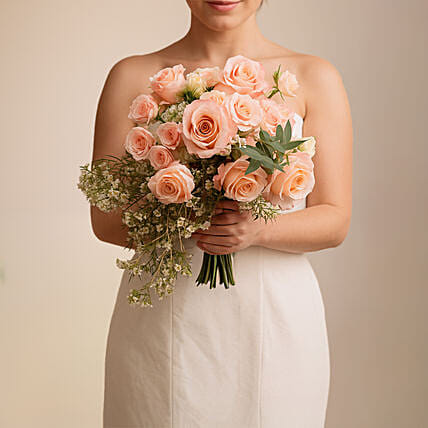
Image Source: FNP.sg
Making Sure Your Wedding Flowers Bouquet Fits the Setting
Your venue silently sets expectations. A loose, organic bouquet that looks magical at a beach wedding may feel oddly informal in a grand banquet hall. Beach ceremonies favour lighter, relaxed arrangements. Palace or ballroom weddings often call for fuller, more structured floral designs. Garden weddings welcome hand-tied, slightly wild bouquets, while traditional or temple weddings often lean into culturally rooted wedding flowers. Your brides bouquet style should look like it belongs in every photo, from aisle shots to reception décor.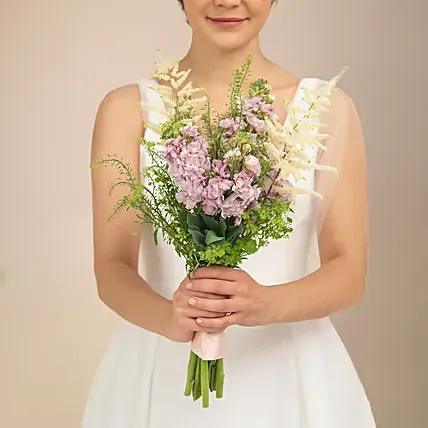
Image Source: FNP.sg
Getting Proportion Right for Your Dress Shape
Scale is where many brides go wrong. A dramatic dress paired with a tiny bouquet can disappear visually, especially in photographs. Full skirts and ball gowns usually need bouquets with presence, answering the common question of what bouquet suits ball gown wedding dress styles. Sleeker silhouettes shine with smaller, elongated, or cascading designs that follow the body’s lines. Handle length, bouquet shape, and how it sits against your waist all matter. A simple mirror test during fittings, holding a mock bouquet at chest height, can immediately reveal whether proportions feel right. This is the heart of dress silhouette bouquet matching.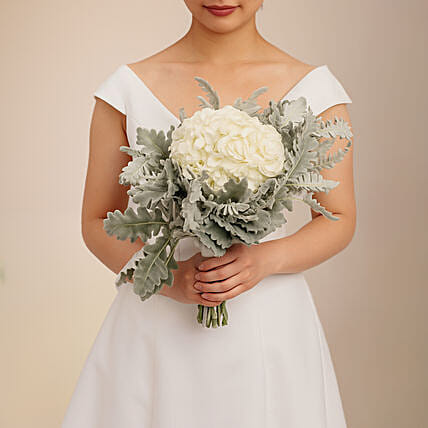
Image Source: FNP.sg
Knowing When Wedding Flowers Bouquet Should Step Back
A useful styling principle is the one hero rule. If your dress is dramatic, your wedding flowers bouquet should whisper. If your dress is minimalist, your bouquet can speak up. Bold florals often work beautifully with clean, modern gowns. What rarely works is pairing highly embellished dresses with overly colourful or complex bouquets. Think of flowers as jewellery. They accent, they don’t replace.Having the Right Conversation With Your Florist
Your florist isn’t a mind reader, but they are a visual expert. Bring clear references: dress photos, close-ups of fabric, venue images, and your colour palette. A thoughtfully curated Pinterest board helps, but only when it reflects a consistent vision.Ask questions like:
- “How will this bouquet photograph?”
- “Will this overpower my dress?”

Image Source: Unsplash
Completing the Look With Supporting Wedding Flowers Bouquet
Your Wedding flowers bouquet sets the tone for everything else. Bridesmaids’ bouquets should complement, not clone, yours. Boutonnières should echo your flowers subtly. Aisle décor, mandap, or altar arrangements should feel connected to the same story. Consistency across all florals is what creates that quiet, luxury feel guests may not consciously notice, but always feel.
Image Source: Unsplash