
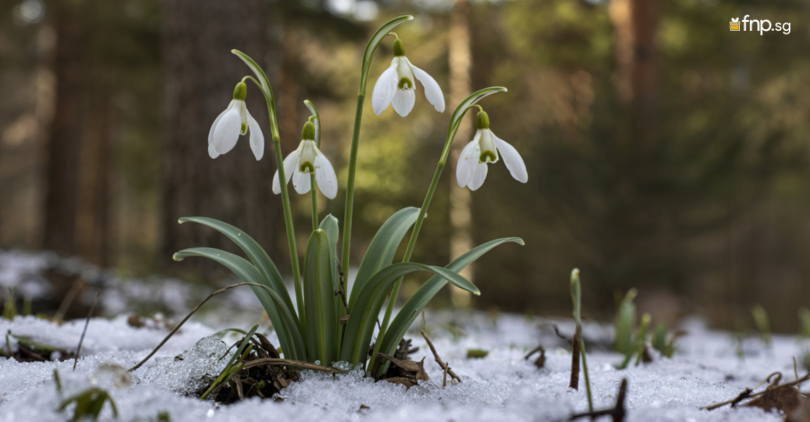
Rare Flowers and Their Meanings: The Story of Snowdrops

In the quietest part of the year, when winter still lingers and colour feels scarce, a small white flower quietly announces change. Snowdrops are not loud, dramatic blooms. They don’t demand attention. Instead, they arrive softly, often pushing through frost-covered soil, reminding us that renewal begins long before spring fully arrives. Often associated with hope, resilience, and new beginnings, snowdrops hold a special place in the world of rare flowers. Their story blends history, symbolism, and seasonality, making them deeply meaningful beyond their delicate appearance.

What Are Snowdrops?

Snowdrops belong to the botanical genus Galanthus, a name derived from Greek words meaning “milk” and “flower,” referencing their soft white petals. Key characteristics of snowdrops
  • Petite, bell-shaped blooms with drooping heads
  • Pure white petals, sometimes marked with subtle green accents
  • Slender stems that bend gracefully toward the ground
These flowers are admired not for size or extravagance, but for their quiet strength and refined beauty.

A Look Into the Past: How Snowdrops Became Symbolic

The History of snowdrops dates back centuries, particularly across Europe and parts of Western Asia. They were among the earliest cultivated ornamental flowers in monastery gardens, where monks valued plants that bloomed during winter’s end. Over time, snowdrops became closely linked to folklore and legend:
  • In some traditions, they were seen as a sign of hope after hardship
  • In others, they symbolised comfort during times of grief
  • Their early bloom made them a metaphor for endurance and faith
This layered history continues to influence how snowdrops are viewed today as flowers that quietly mark transition rather than celebration. a close up of a flower

Image Source: Unsplash

Galanthus Flowers and Their Natural Habitat

Galanthus Flowers are most commonly found growing in:
  • Woodlands
  • Meadows
  • Hillsides across Europe
They thrive in cold climates and often bloom when snow is still present on the ground. Their ability to survive harsh conditions adds to their symbolic depth and rarity. Unlike many ornamental flowers, snowdrops are not bred to impress. They are admired for staying true to their natural form.

Snowdrops as the First Flowers of Spring

Snowdrops are often referred to as the earliest flowers of spring, even though they bloom while winter is still in full swing. Why they bloom so early
  • Their bulbs are adapted to cold soil
  • They require minimal sunlight to emerge
  • Their growth cycle is timed with seasonal shifts rather than temperature alone
This early arrival makes them symbolic of anticipation, the promise of warmth, colour, and growth yet to come. Galanthus flowers image

Image Source: Pexels

Snowdrop Meaning & Symbolism

The emotional depth of snowdrops lies in what they represent rather than how they look. The snowdrop meaning & symbolism has evolved across cultures, but a few themes remain consistent. What snowdrops symbolise
  • Hope: Blooming when conditions are toughest
  • Renewal: Signalling fresh starts and transitions
  • Purity: Reflected in their clean, white appearance
  • Resilience: Standing tall despite frost and snow
Because of these meanings, snowdrops are often associated with quiet encouragement rather than grand celebration.

Snowdrops and January: A Seasonal Connection

Snowdrops hold special significance for those born in January, as they are commonly recognised as January’s birth month flower. This connection feels natural:
  • January represents beginnings and intention-setting
  • Snowdrops bloom during this reflective period
  • Both symbolise resilience after endings
People associated with snowdrops are often described as thoughtful, grounded, and quietly strong traits that align with the flower’s understated nature. a bunch of white flowers that are in the grass

Image Source: Unsplash

Snowdrops as Birthday Flowers

While roses or lilies may dominate birthday gifting, snowdrops bring a different kind of emotional value. As birthday flowers, they carry meaning rather than spectacle. Why snowdrops feel personal
  • They represent encouragement and optimism
  • Their rarity makes them feel thoughtful and intentional
  • They suit minimal, meaningful gifting styles
Snowdrops resonate especially well with those who appreciate symbolism, subtle beauty, and seasonal significance over traditional floral choices.

Why Rare Flowers Like Snowdrops Matter Today

In a world of fast trends and bold visuals, rare flowers such as snowdrops offer a refreshing contrast. Their appeal lies in restraint, storytelling, and emotional connection. Modern appreciation for snowdrops
  • Growing interest in seasonal and symbolic blooms
  • Shift toward mindful gifting
  • Preference for meaning over extravagance
Snowdrops remind us that beauty doesn’t need to be loud to be powerful.

Snowdrops in Gardens and Culture

Snowdrops are more commonly admired in gardens and natural landscapes than in bouquets. Where they shine best
  • Woodland gardens
  • Naturalised lawns
  • Quiet green spaces
They often bloom in clusters, creating soft white carpets that feel almost poetic in their simplicity.

Image Source: Pexels

A Flower That Speaks Without Words

Snowdrops don’t compete for attention. They don’t overwhelm with colour or fragrance. Instead, they tell a quiet story of patience, endurance, and hope. In understanding snowdrops, we’re reminded that some of the most meaningful symbols in nature are also the most understated. Their presence marks a pause between seasons, a gentle reminder that new beginnings often arrive quietly, long before we expect them.
Inspired by the quiet symbolism of rare blooms like snowdrops, elevate every moment with thoughtfully curated flower bouquets and elegant flower arrangements—from timeless preserved flowers and artful dried flowers to truly premium flowers, all handcrafted by a trusted florist Singapore for meaningful gifting.
 

Frequently Asked Questions: 

Q.1 What do snowdrops symbolize?

Ans: Snowdrops symbolise hope, renewal, purity, and resilience. Blooming in winter, they represent quiet strength, new beginnings, and optimism during challenging times, making them meaningful flowers for emotional and symbolic gifting.

Q.2 When do snowdrops typically bloom?

Ans: Snowdrops typically bloom between late January and early March, often appearing through frost or snow. Their early flowering marks seasonal transition and signals the approaching arrival of spring.

Q.3 Are snowdrops poisonous?

Ans: Yes, snowdrops are poisonous if ingested. All parts contain compounds that may cause stomach discomfort or irritation, so they should be kept away from children and pets at home.

Q.4 How should I plant snowdrops in my garden?

Ans: Plant snowdrop bulbs in well drained soil during autumn. Choose a shaded or partially sunny spot, place bulbs pointed end up, water lightly, and allow natural growth.

Q.5 When should you give someone snowdrops?

Ans: Snowdrops are ideal for gifting during January birthdays, new beginnings, moments of encouragement, or times of transition. They convey hope, reassurance, and thoughtful symbolism rather than celebration.

About the author

Preeti Sharma

Preeti Sharma is a seasoned writer at FNP, one of the most trusted names in flowers, plants, and thoughtful presents across the globe. With over three years of experience crafting engaging, search-friendly content, she specialises in translating emotions into words, whether it's for birthdays, anniversaries, seasonal festivals, or just-because surprises.

Before dedicating her creativity to the world of gifting, Preeti honed her skills in diverse industries. Today, she brings that rich storytelling background to help customers find the perfect way to express their love through flowers, personalised gifts, and lush green plants.